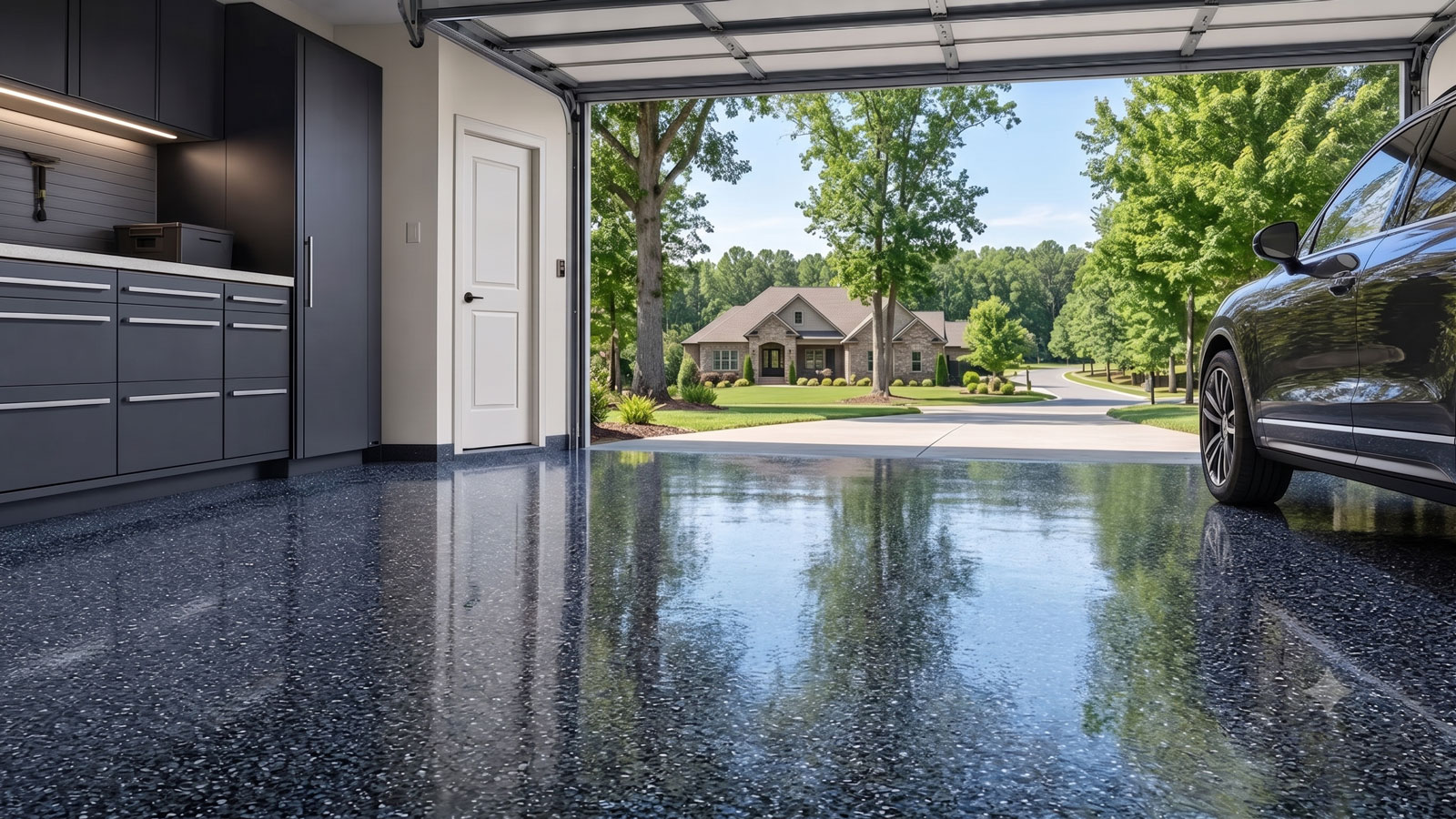
Garage Floor Coating in University Place, WA
Garage floor coating guidance for University Place homeowners near Tacoma and the Narrows, including epoxy, polyaspartic, and decorative flake options.
Floor Coating Services in University Place, Washington
University Place garage-floor decisions begin with the concrete and drainage actually present, rather than a blanket claim about Western Washington rain. University Place runs a municipal NPDES stormwater program and publishes a 2026 stormwater plan. The city provides property owners a surface-water-management fee credit program. These records cannot diagnose a private slab; inspect old coatings and repairs.
The municipality published a 2025 annual stormwater report. Tacoma-area homes can face periods of frequent rain and wet-vehicle parking, but conditions vary by driveway and community. Federal Way documents about 41 inches of annual rain within the wider South Sound region, while the Seattle–Tacoma Airport's 1991–2020 normal is 39.34 inches; neither describes every driveway. Distinguish doorway runoff, wet-car puddles and lasting dampness.
Its illicit-discharge hotline is 253-208-7925. For an individual garage, ask how concrete grinding, patching and joint treatment will be handled. A decorative epoxy or polyaspartic finish can make sound prepared concrete easier to clean, but it will not correct continued rain entry or active slab movement.
Local Market Insight
University Place runs a municipal NPDES stormwater program and publishes a 2026 stormwater plan. University Place maintains storm-basin education and drainage maps. These specific public records distinguish University Place from neighboring areas, but municipal runoff quality does not determine private slab condition. Check the driveway, threshold, repairs and actual garage use.
What Affects the Cost of Garage Floor Coating in University Place?
The coating price for a University Place garage depends on condition and access as well as floor size. The city provides property owners a surface-water-management fee credit program. This public program should prompt questions about water, but it is not evidence that a household needs a moisture barrier or drainage repairs.
Ask for an itemized scope: old-coating removal, mechanical grinding, crack treatment, topcoat, finish texture and vehicle-return time. Cabinets, steps, threshold edges and temporary parking can change labor beyond square footage.
- Existing concrete and finishes: Concrete may be painted, sealed, patched or previously coated. A house's age does not establish the slab's condition. Inspect any residual finish and specify appropriate mechanical grinding.
- Municipal stormwater context: University Place runs a municipal NPDES stormwater program and publishes a 2026 stormwater plan. This public drainage and water-quality information cannot diagnose vapor or rain entry at an individual garage. Check real site conditions.
- Rain at the garage door: The city provides property owners a surface-water-management fee credit program. Inspect driveway slope, downspout discharge and seals if rain crosses the threshold. Puddles deposited by parked cars require a different response.
- Cracks and surface repairs: Old repairs, joints and spalling affect preparation and may need separate treatment. A decorative coating should not be sold as a structural repair or drainage substitute.
- Garage access and storage: Steps, cabinets, drains and edge transitions affect grinding access. A household should plan where vehicles and belongings can move while the coating cures.
- Finish and cure conditions: Flake, texture, topcoat layers, installation humidity and cure requirements change scope. Ask which conditions must be met and when tires can safely return.
Call for a clear, project-specific estimate—or request one online.
University Place Stormwater Records and Garage Doorway Conditions
University Place runs a municipal NPDES stormwater program and publishes a 2026 stormwater plan. The city provides property owners a surface-water-management fee credit program. These details establish real public stormwater responsibilities and distinct community priorities. Public inlets and detention facilities are designed to manage runoff beyond a house, but they do not certify that a specific garage remains dry during rain. Homeowners should examine the apron, door seal, gutters and actual flow direction before treating water at the entrance as a flooring issue.
The municipality published a 2025 annual stormwater report. A rainy regional climate can bring water indoors with vehicles and footwear even when the garage roof and doorway are watertight. An observed wet tire track may simply need routine cleaning. By contrast, rain moving across a garage threshold or moisture persisting on an empty slab can warrant a separate drainage or moisture assessment before resin is applied.
University Place maintains storm-basin education and drainage maps. This quantitative reference concerns public utility work, development regulation or the wider community. It cannot determine the condition of earlier concrete finishes. A contractor should check paint, sealer, repaired cracks, contaminated spots and bond strength and explain which require removal or grinding before coating.
A properly selected flake or resin finish on sound concrete can support easier cleanup. But coatings cannot replace fixing exterior runoff or slab movement. A written estimate should distinguish repairs to concrete and grade from purely decorative options, so homeowners know exactly what they are purchasing.
Surface Preparation and Wet-Weather Garage Use in University Place
Its illicit-discharge hotline is 253-208-7925. This gives University Place a particular public works or watershed context without proving anything about one home's garage floor. The practical questions are which surface is present, what daily traffic it sees and how much downtime is realistic. A garage used for cars, bikes and storage needs a work plan that includes access to perimeter edges and steps.
The floor may have been repoured or recoated long after the home was built. A contractor should assess actual soundness, old paint, patched joints and residues before applying mechanical profiling. Ask which grinding method and repairs are appropriate, how rainwater near the threshold will be handled, and what conditions must exist for coating layers to bond.
Compare complete epoxy and polyaspartic systems on the finished texture, sheen, expected cleaning, exposure to daylight at the door and manufacturer-specific curing. An installation schedule should specify when foot traffic and vehicles can safely return. Avoid choosing solely by chemistry or a promised one-day turnaround.
- Inspect previous paint, sealers and repairs.
- Mark concrete cracks and moving joints.
- Observe the doorway during heavy rain.
- Separate car-carried puddles from persistent dampness.
- Clear equipment and stored belongings.
- Confirm topcoat, cleaning and cure guidance.
Frequently Asked Questions
What distinguishes University Place's stormwater management?
University Place runs a municipal NPDES stormwater program and publishes a 2026 stormwater plan. This public record supports questions about runoff but does not identify slab moisture in any home. An installer should evaluate the actual driveway and concrete before choosing treatment.
Does South Sound rainfall mean every University Place garage needs moisture mitigation?
No. Federal Way reports approximately 41 inches of yearly rain, while Sea-Tac Airport's normal is 39.34 inches. Those regional figures do not diagnose individual garage vapor, leaks or concrete soundness.
Can epoxy seal water out of a leaking garage?
Not reliably. Correct recurring rain entry, defective door seals or driveway grading before coating. Resin may simplify cleaning over sound concrete, but it is not a structural or drainage remedy.
Should University Place homeowners choose epoxy or polyaspartic?
Either may suit prepared concrete. Compare actual repairs, mechanical surface profile, layered system, finish traction, application conditions and cure schedule. Neither product is a universal solution to moisture problems.
What should a University Place quote cover?
Ask about removal of previous coatings, repairs, edge work, finish texture, layers, maintenance and vehicle-return time. Make arrangements for tools, stored items and temporary parking during installation.
University Place Neighborhoods & Local Context
Phone Quote Line
Speak with a floor coating specialist about your project and get a realistic estimate range.
(253) 323-4141Typical Project Cost
$3,000-$5,500
Typical range for a two-car garage. Final pricing depends on floor size, concrete condition, prep work, coating type, and finish options.
Helpful Guides
Other Service Areas